
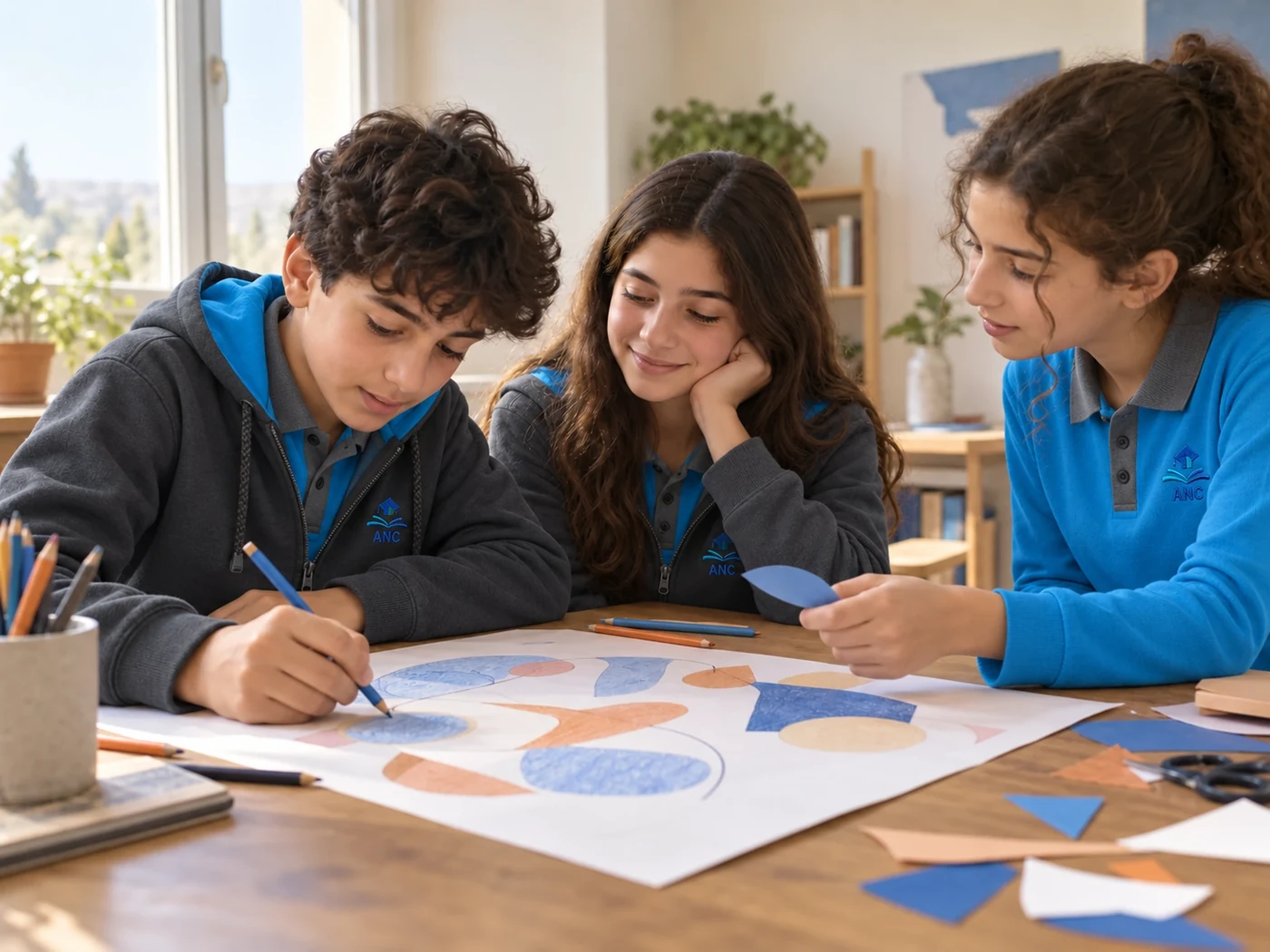
Sometimes an idea feels stuck because we are looking at it from only one position. A different perspective can help us notice an assumption, understand another person’s needs, or find a step we had overlooked.
Describe the problem before solving it
Imagine a group trying to make a paper bridge. It bends in the middle. Before adding more paper, describe what is happening: where it bends, what supports it, and how the load is placed. A precise observation makes it easier to decide what to investigate next.
Change the frame
Ask, “Are we trying to use more material, or to use this material differently?” Folding the paper could be one possibility to compare. Moving the supports could be another. These are ideas to test, not answers to assume. Keeping the comparison fair helps make the results more useful.
The same habit can help in a disagreement. One person may want speed while another wants time to check their work. Naming both concerns may reveal that the problem is how to make room for each, rather than deciding who is right.
Return to the evidence
A fresh perspective is an invitation to explore. Ask which explanation fits what you observe and what remains uncertain. You can welcome a new idea while still testing it carefully. Curiosity and clear reasoning work well together.
Try it today: describe a small problem in two different ways. What becomes visible in the second description?
An illustrative learning resource for this website. It does not describe a verified ANC classroom activity or student achievement.